Offshore crew changes
Crew changes are notoriously difficult, especially in rough seas. Traditional methods often rely on cranes to lift personnel between vessels, increasing complexity and danger. Offshore operators need safer, more efficient solutions.
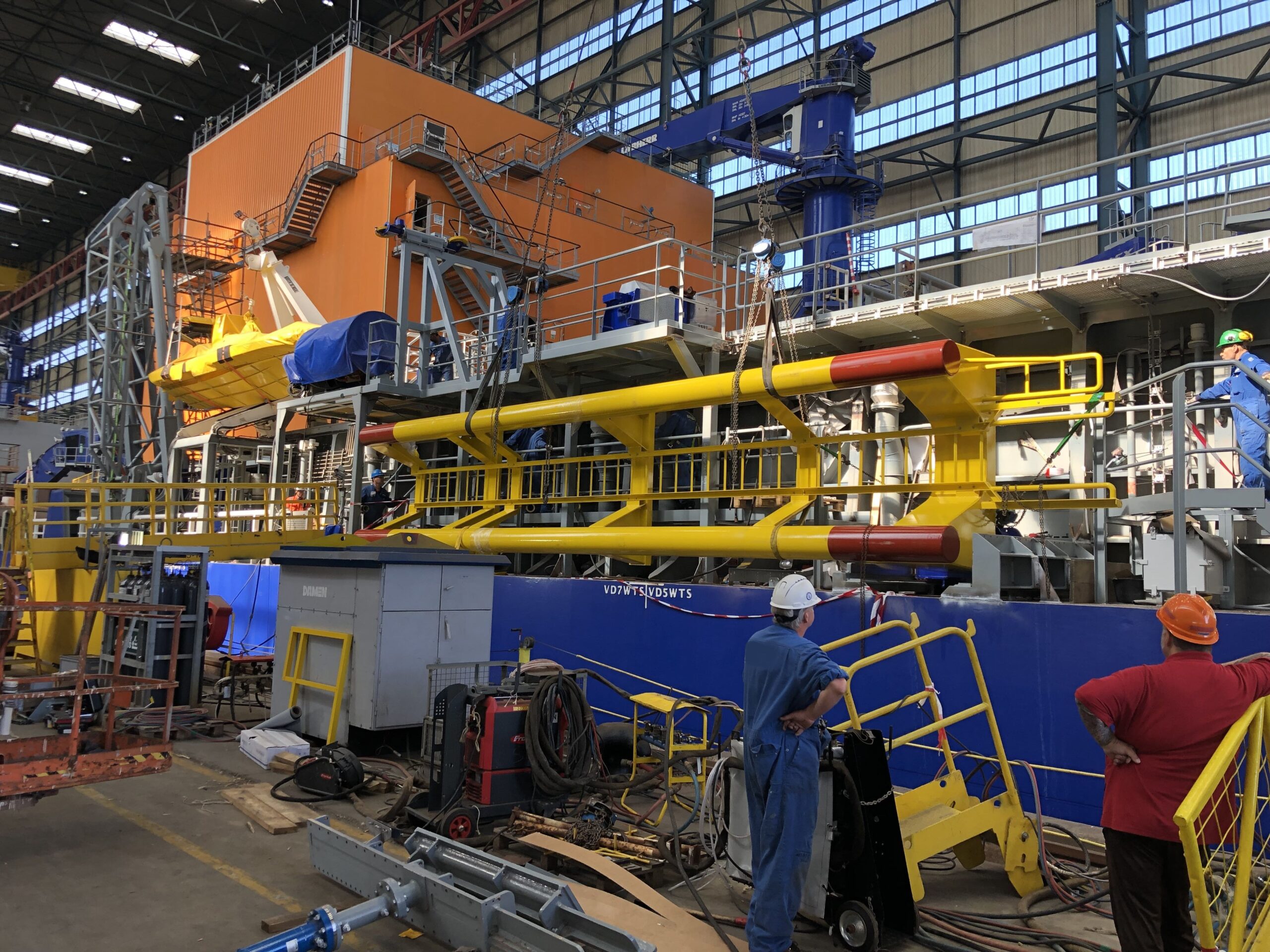
KENC’s Automatic Boat Landing System provides a reliable, robust, and secure solution. Unlike traditional methods, it doesn’t require heavy equipment like cranes. This compact, fully automatic system reduces manual handling and minimizes risks.
Boatlanding configurations
KENC’s Boat Landing System offers two distinct configurations to suit various vessel types and operational needs.
H-Type (Horizontal Configuration)
Ideal for larger vessels with ample deck space, the H-Type system hangs horizontally. This compact design allows for easy storage and deployment, without interfering with other deck operations. Therefore, it’s an ideal choice for long vessels.
V-Type (Vertical Configuration)
For vessels with limited deck space, the V-Type system is a more suitable option. Its vertical position minimizes its footprint, while still offering the same reliability and automation features as the H-Type. Consequently, it’s a versatile choice for different vessel setups.
Why Choose KENC’s Boat Landing System?
KENC, with over 20 years of offshore engineering expertise, offers custom-engineered solutions that prioritize safety, efficiency, and uptime. Our Boat Landing System is specifically designed to minimize risks and optimize operational efficiency, providing a simple yet effective solution for your crew change needs. Read here how kenc’s boatlanding is perceived in practice.
If you’re seeking a reliable, crane-free solution for offshore crew transfers, contact us today to learn how KENC’s Automatic Boat Landing System can benefit your operations.